



The most exported wine of Italy's countryside
 Francesca Negri,
Friday, 26 September 2025 (4 minutes read)
Francesca Negri,
Friday, 26 September 2025 (4 minutes read)


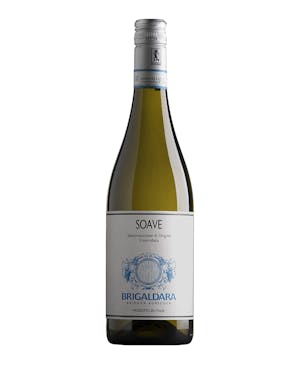
Soave DOC, Soave Classico DOC, Soave Superiore DOCG, Soave Spumante DOC. One wine, four variations, or rather five if you also consider the sweet version of Recioto di Soave DOCG. Soave is a white wine with many nuances, one of the longest-lived in Italy (it can age for up to 20 years) and the most exported in the world. It is certainly one of the most modern wines in terms of its history, thanks to its excellent quality/price ratio and mineral yet pleasantly fruity style, which is fully in line with the tastes of today's consumers.
Two grapes for a trendy bouquet
The main grape variety used in Soave wine is Garganega (minimum percentage used 70%), which has always been widely grown in the hills east of Verona. Garganega grapes are characterised by their high yield, although recently this has been significantly reduced by producers who are more focused on quality. Other permitted grape varieties, up to a maximum of 30%, are Trebbiano di Soave, Pinot Bianco and Chardonnay.
Traditional and prestigious
As early as 1931, Soave was recognised as a “typical and prestigious” wine, receiving its Denominazione di Origine Controllata (Controlled Designation of Origin) Soave was recognised as a ‘typical and prized’ wine product. In 1968, it received the Denominazione di Origine Controllata (Controlled Designation of Origin) certification and in 1998, the Denominazione di Origine Controllata e Garantita (Controlled and Guaranteed Designation of Origin) certification for Recioto, followed in 2001 by the DOCG certification for the Soave "Superiore" version.
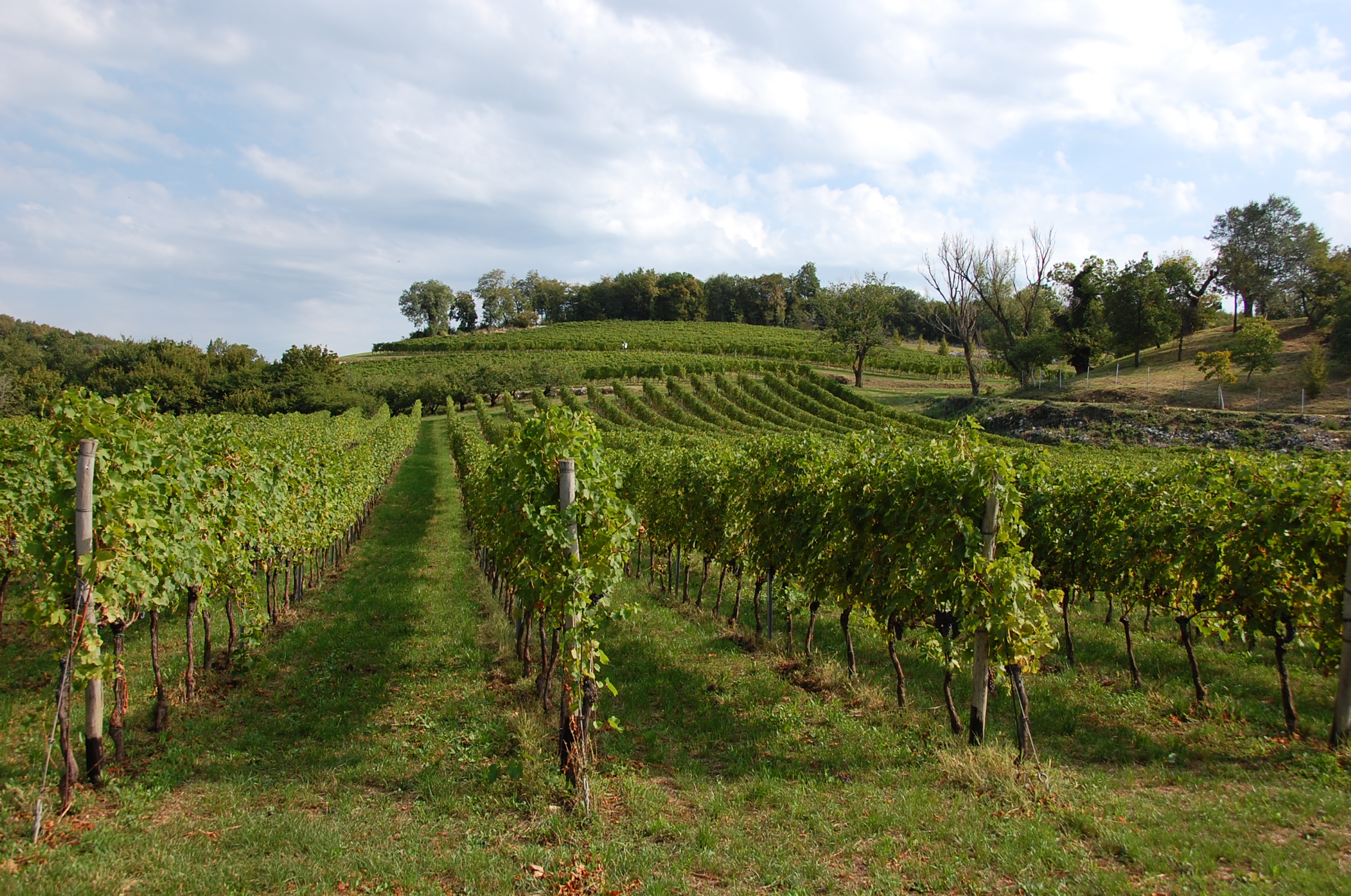
The Soave production area is located in the eastern part of the hilly arc of the province of Verona (north of the Serenissima motorway, between the 18th and 25th km between Verona and Venice). It includes all or part of the territories of the municipalities of Soave, Monteforte d'Alpone, San Martino Buon Albergo, Lavagno, Mezzane di Sotto, Caldiero, Colognola ai Colli, Illasi, Cazzano di Tramigna, Roncà, Montecchia di Crosara, San Giovanni Ilarione and San Bonifacio. With the recognition of Recioto di Soave as a DOCG and subsequently with the new boundaries for Soave Superiore DOCG, the production area has been essentially divided into three sub-areas that are almost equivalent in size and viticultural consistency. The oldest area, also known as the historic area, first defined in 1931 and coinciding with Soave Classico, is located in the hills of the municipalities of Monteforte d'Alpone and Soave and covers a vineyard area of 1,700 hectares. The second zone, which is almost entirely hilly, stretches from San Martino Buon Albergo to Roncà, covering the hills of Val di Mezzane, Val d'Illasi, Val Tramigna and Val d'Alpone, and constitutes the Colli Scaligeri subzone, which covers 2,400 hectares. The third area of Soave DOC is located in the more or less flat areas of the aforementioned valleys, covering an area of approximately 2,400 hectares.
A wine and its village
Many believe that the name of the medieval village of Soave, in eastern Verona, derives from the “soavità” (sweetness) of the wine produced here. More likely, the name dates back to the time of the barbarian invasions that followed the fall of the Roman Empire. On the hill overlooking the plain, in a strategic position on the east-west communication routes, a tribe of Swabians settled, known as Suebi according to the ancient Latin pronunciation, from which the name Soave would later derive.
The link between the territory and its wine is so strong that every year the town of Soave dedicates a “Medieval Festival” to its wine, scheduled for around mid-May. For the occasion, within the walls of the historic centre, under the watchful eye of the imposing castle that dominates the hill, the square and streets of the centre of Soave are brought back to life with a 14th-century atmosphere thanks to events, customs, ancient crafts, medieval games with archers, knights and flag-wavers, historical parades and ceremonies. In mid-September, on the other hand, the “Soave Grape Festival” has been held since 1929, a celebration of the Garganega grape variety with fireworks, fountains spouting wine instead of water and lots of typical local food.
The vine-covered hills of Soave have been recognised as Italy's first “Rural Landscape of Historical Interest”, included in the “National Register of Rural Landscapes of Historical Interest, Agricultural Practices and Traditional Knowledge” established by the Ministry of Agricultural and Forestry Policies.
How is it?
A wine for everyday dining, as well as for special occasions. Soave is just that, a white wine capable of great versatility at very competitive prices. It should be served in fairly large glasses, even tulip-shaped ones. In my opinion, the ideal serving temperature is between 8 and 10 °C for younger, less complex Soave wines, while Superiore wines can also be served at 10-12 °C. A very trendy wine: Soave is now a chic wine, an original and unexpected choice compared to a Gewuerztraminer, for example, and it is not a complicated wine. Its drinkability makes it very pleasant, especially in summer.
With its delicate colour, clear nose and immediate taste, Soave is a fresh and pleasant wine that is easy to drink, even in its aged versions. The colour is intense straw yellow, which can sometimes tend towards greenish, while the nose releases aromas of white flowers and even exotic fruit. On the palate, there is a very varied bouquet ranging from lime to violet, from rose to herbaceous and flinty notes, with some exotic touches of pineapple and elderflower, generally quite mineral. However, the flavour is strongly influenced by the vinification process and, in particular, by ageing in wood, which almost always introduces a hint of vanilla.
Pairings? Rice and peas, salmon trout or trout alla mugnaia, roast kid and rabbit, cheeses such as Taleggio and Agordino di malga, but also homemade pasta, soups and minestrone, fish and shellfish: Soave is a versatile and imaginative wine, capable of accompanying many varieties of recipes, both from Venetian cuisine and international cuisine.