


Paltrinieri: an Eclipse that has illuminated for 100 years
 Maddalena Frigerio,
Friday, 27 February 2026 (0 minutes read)
Maddalena Frigerio,
Friday, 27 February 2026 (0 minutes read)


One hundred years isn't just a chronological milestone: it's a tangle of hands, harvests, counter-current choices, and forward-looking looks. For Cantina Paltrinieri, in the heart of the Lambrusco di Sorbara DOC appellation, 2026 represents much more than a celebration. It is a moment of gratitude and awareness: towards those who began this journey, towards the land between Secchia and Panaro that made it possible, and towards the new generations called to write its future.
In this interview, we retrace with Barbara, Alberto Patrilinieri's wife, a century of history through memory, identity, vision, and innovation. From the pioneering choice of the pure Sorbara to the consecration of the Leclisse, to the new projects that look far ahead, the portrait emerges of a cellar that has been able to renew tradition without ever betraying its roots.
What does it mean to celebrate the winery's 100th anniversary?
For us, the centenary is not so much the celebration of a milestone, but a gesture of thanks. Alberto and I represent only part of this story: thirty years out of a hundred. We have taken in hand a reality that already existed, built by the work and vision of those who came before us.
Celebrating means saying thank you. And above all, looking forward. More than a record of the past, it is a wish: that these first hundred years should be only the beginning of a still long journey, to be handed over to the next generations.
Is there an episode that you feel is particularly representative of these 100 years?
The turning point was 1998, when we decided to go out with the first pure Sorbara, 100%. A choice that marked not only our history, but also, in part, that of the denomination.
The Lambrusco di Sorbara DOC specifications include a blend of Sorbara and Salamino, with the latter up to a maximum of 40%. In the vineyard, the presence of Salamino is necessary for agronomic reasons: Sorbara is a “sterile” grape variety, it cannot self-pollinate, and for this reason every three Sorbara plants one Salamino is planted. But it is not written in the specification that that percentage should also be maintained in wine.
We decided not to add it at all.
Thus was born a Lambrusco completely different from the common imagination: an empty, almost transparent color, vibrant acidity, a thin and elegant profile. In 1998, however, the time was not yet ripe. The market rewarded red wines, structured, often lovable. We've been struggling a lot. But it was the only way to say: we do something else.
Let's get to the territory, how has it shaped the identity of your wines?
Sorbara is a small hamlet in the province of Modena, located at the narrowest point between the Secchia and Panaro rivers. Descending towards the Po, the two waterways approach until they almost touch each other: Sorbara is exactly there, in that narrow strip of land.
It is a very fertile area, so much so that it is sometimes called “little Mesopotamia”. The soils are rich in silt, poor in clay, extremely mineral. Roots easily find water and nourishment. This is where the acid tension so marked that characterizes the Sorbara comes from.
Since 2008 we have been collaborating with the Tuscan winemaker Attilio Pagli, who has now become a family friend. His teaching is simple and profound: the good winemaker is not the one who adds, but the one who takes nothing away from what the countryside offers.
Our wines try to be this: pure expression of freshness, acidity and minerality. Characteristics that for years were considered defects, in an era when soft and lovable wines were preferred. Today those same qualities have become a strength. Perhaps because, deep down, they also reflect a little’ our character: direct, sometimes angular, but authentic.
How much has viticulture changed in these 100 years?
We have experienced the most rapid changes over the last thirty years. For decades, only one wine was made, always in the same way. With our grandparents it was like that.
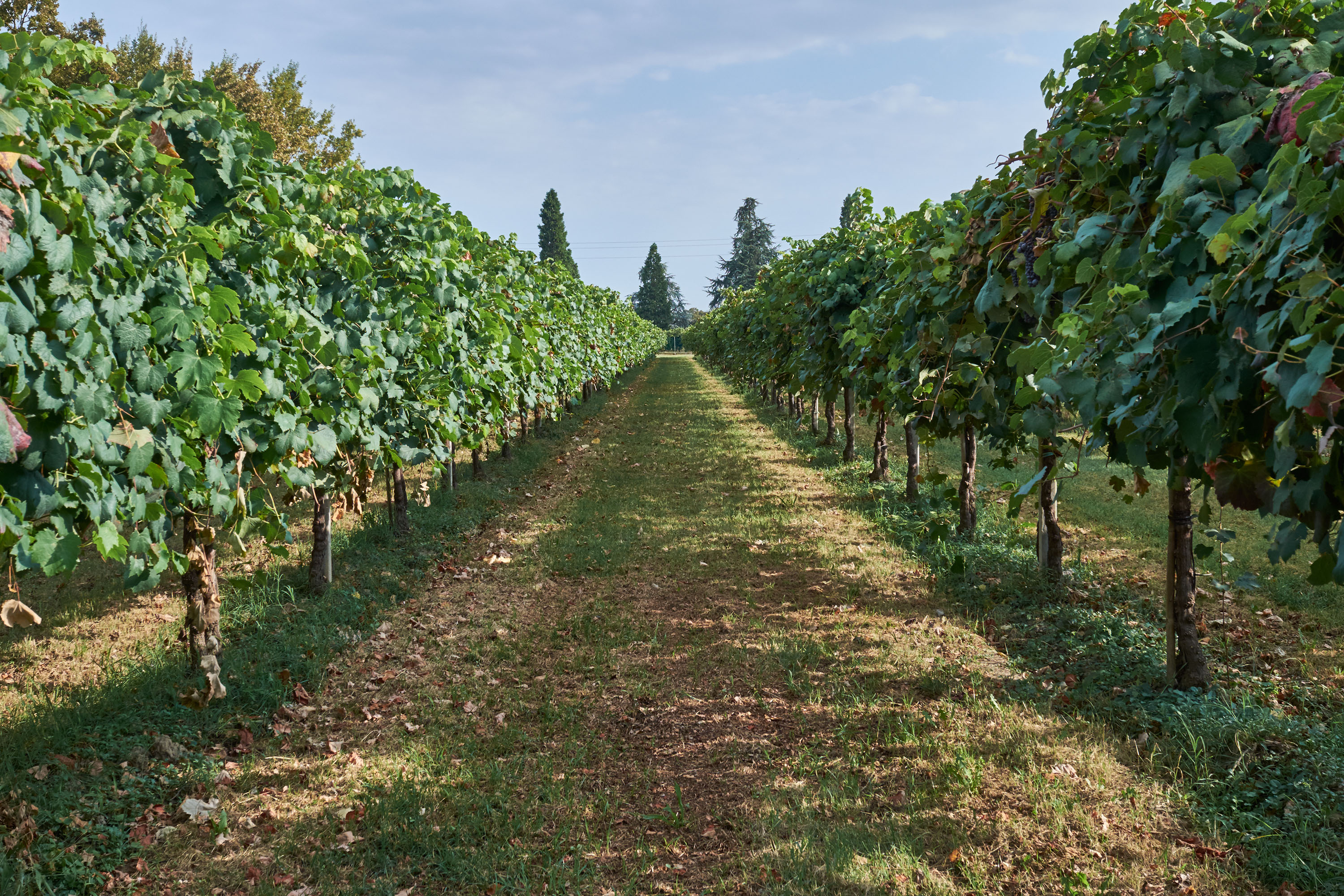
The most interesting transformations took place in the cellar rather than in the vineyard. Of course, today the plants are more modern and manual labor has decreased, but the real revolution has been cultural.
In 1996, at Alberto's first harvest, Lambrusco was hardly considered a “serious” wine. At fairs one felt almost embarrassed. Today the situation is completely different. Wine has become a cultural event, a moment of sharing.
In the years ’90 99% of our customers were private customers. Today, 50% of production is destined for abroad and the restaurant world has become central, also thanks to the collaboration with Proposta Vini, which has lasted for fifteen years. We had courage, we were at times “anarchists”.
Is there a grape variety that symbolizes your history?
Without a doubt the Sorbara. It is a native grape variety that can only be grown in a small plot of land: about a third of the province of Modena, in its northern part.
It is a wild grape variety, which historically grew along the banks of rivers. Fragile and difficult, but capable of a unique personality. It perfectly tells our identity.
What if you had to choose a symbolic bottle?
We choose Leclisse. The real turning point came with the 2007 harvest. We had three tanks of pure Sorbara. In one, Alberto decided to work the must cold, bringing it to zero degrees, carrying out a static decantation and starting the fermentation on perfectly clean must. Today it is a widespread practice; in 2007 it was not.
During a transfer we noticed that that tub had something extraordinary: intense scents of rose and violet, a very delicate pink color, an unexpected finesse. Thus was born the idea of calling it “Leclisse”, to underline its exceptionality.
In 2008 the first year, 2007, was released. In 2010, the Tre Bicchieri arrived: an award that legitimized our journey even outside Modena, and then abroad. The Leclisse, a long Charmat method, has become a symbol of our idea of innovation.
The 2010. Even today, if open, it is extraordinary. Prove that Lambrusco is not a wine with a “expiration date”. If worked carefully, it can have amazing longevity and depth. Lambrusco cannot be defined simply as a simple and immediate wine.
And if the Leclisse represents innovation, the Radice instead represents tradition.
And how can innovation and tradition coexist?
For us, tradition is not a fixed point, but something that must continually renew itself. If it stays still, it becomes folklore. True innovation is that which manages to transform tradition without betraying it.
Today, among other things, the market is particularly favorable to our wines: look for rosés, bubbles, marked acidity, and low levels. The pure Sorbara responds perfectly to these requests and is extremely versatile, capable of interacting even with cuisines far from Emilia-Romagna, such as those from Northern Europe or Canada. With an additional added value: affordable prices.
Tell us about the centenary news…
2026 will be a year of change. Cecilia has been working at the company for two years and has become a mother. Giovanni, after studying oenology in Italy and France, returned with enthusiasm and new ideas.
We entrusted him with the oldest vineyard on the company to experiment freely. After a manual harvest, he vinified six pure Sorbara tonneaux. It's just the beginning.
In parallel, we are developing an ambitious project: a pure Sorbara using the Solera method. The idea was born in 2020, during the pandemic. During that period, we produced a cuvée in solidarity with the 2017, 2018, and 2019 vintages, refermented in bottles, donating all proceeds to the Banco Alimentare. Thanks also to e-commerce, we were able to donate 28,000 euros.
From that experience, a structured project was born: every year we added a tonneaux, with continuous additions until, in 2023, we reached six complete barrels. Thus was born a cuvée that spans the years from 2017 to 2023. There will be very few bottles: perhaps a small preview as early as this year.
We are also investing heavily in hospitality: one person dedicated to visits and tastings and nearly 3,000 visitors in 2025 alone. It is gratifying to see how much interest there is in this territory.
Where do you imagine your cellar in 100 years?
It's a complex question, but the answer for me is simple: I don't know.
And that's okay. It will be up to our children to imagine her. We must be able to step back, as our grandparents did with us.
The future belongs to them. And this, perhaps, is the deepest sense of celebrating a hundred years.