


There are wines that do more than simply fill a glass; they embody a landscape, a culture and an identity that spans the centuries. Chianti Classico is one such wine: a wine born in the heart of the most authentic Tuscany which, since the Middle Ages, has represented a perfect synthesis of agriculture, politics and rural life.
As early as the 13th century, the Chianti League - composed of the territories of Radda, Gaiole and Castellina - defined a precise production area, anticipating the modern concept of naming by centuries: as reported in the Dizionario Geogradico Fisico Storico della Toscana by Emanuele Repetti (1833), the political district of Chianti was divided "into three thirds, that is, Terzo di Radda, Terzo di Gajole and Terzo della Castellina". But it was in 1716, with the proclamation issued by Grand Duke Cosimo III de' Medici, that Chianti was officially delimited, becoming one of the first examples in the world of wine regulation.
Its myth is also expressed by the symbol that represents it, a symbol that embodies the identity of the territory more than any other: the Black Rooster. According to medieval legend, Florence and Siena decided to establish the borders of Chianti by relying on a competition between two knights, who would set out at cockcrow. The Florentines' choice fell on a black rooster, which, kept fasting to make him more impatient, anticipated his song, allowing the knight to set out first and conquer much of the territory. That rooster has become the official emblem of Chianti Classico, a guarantee of authenticity and belonging to the denomination.
Today, Chianti Classico is much more than a appellation: it is a wine that has evolved without losing its connection with its native territory, maintaining Sangiovese at its center, a grape variety capable of interpreting every nuance of the territory with almost surgical precision.
The production areas of Chianti Classico
The Chianti Classico stretches between Florence and Siena, in a hilly landscape that seems carved for vines. Here, altitudes between 250 and 600 meters, complex soils and a breezy climate create ideal conditions for slow and complete ripening of the grapes. An area of approximately 70,000 hectares that entirely encompasses the municipalities of Castellina in Chianti, Gaiole in Chianti, Greve in Berardenga, Poggibonsi and San Casciano in Val di Pesa.
This mosaic of terroir makes Chianti Classico an extremely multifaceted denomination, where each label is a different reading of the same territory.
To say Chianti Classico means Sangiovese.
Although at least 80% of its use is covered by the regulations (Canaiolo, Colorino, and Ciliegiolo can also be used, as well as Cabernet Sauvignon and Merlot), Chianti Classico is, first and foremost, Sangiovese. A demanding grape variety, which does not forgive mistakes but which, when interpreted correctly, produces wines of extraordinary finesse.
Choosing a Chianti Classico today means coming into contact with a thousand-year history, made up of hills, wise hands and identities that stand the test of time.
And it is precisely in this ability to tell the story of the territory that Chianti Classico continues, even today, to never lose its voice. A story that we give you through five labels chosen from the Wine Proposal Catalogue: five wines that tell a panorama full of interpretations, where each winery tells a fragment of territory.
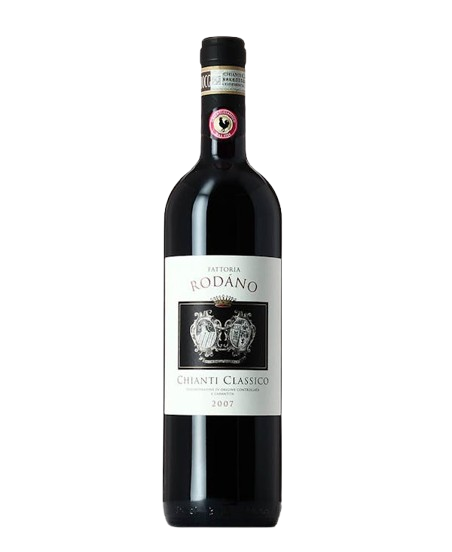
FATTORIA DI RODANO - CHIANTI CLASSICO BIO
CASTELLINA IN CHIANTI
In the heart of Castellina in Chianti, Fattoria di Rodano is a family business now in its fourth generation, where work in the vineyard and cellar follows a strictly organic approach. All operations are manual, fermentation is spontaneous and the refinement alternates cement and large barrel, in a balance that prioritizes authenticity and respect for the territory.
Chianti Classico was born from a traditional blend - 90% Sangiovese with Colorino and Canaiolo - and is expressed with notes of raspberry and strawberry, accompanied by a full but silky structure. The sip is harmonious, with well-integrated tannins and a fresh, persistent closure.
At the table, it is ideal alongside traditional dishes: a lasagna with ragù, a Sunday roast, or medium-aged cheeses, where balance and matter meet without ever overpowering each other.
CASA EMMA - CHIANTI CLASSICO BIO
BARBERINO TAVARNELLE
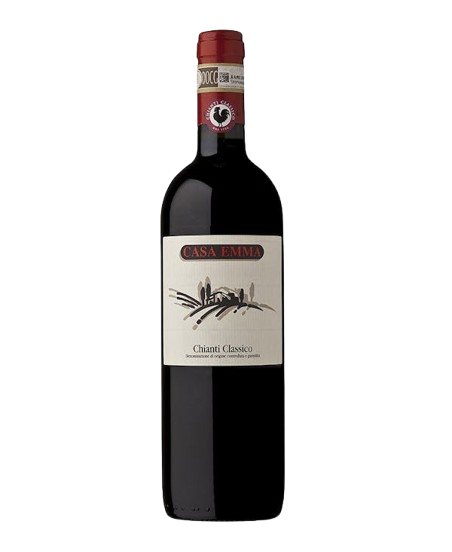
In the heart of Chianti Classico, Casa Emma was born when Fiorella Lepri, in 1969, decided to purchase the estate. Today the company is led by the Bucalossi family, who preserve its original spirit among vineyards and over a thousand olive trees.
The Chianti Classico is produced mainly by Sangiovese, with Canaiolo and Malvasia Nera completing the assembly. In the glass it presents itself with an intense ruby red with purple reflections, while in the nas it expresses a vivid fruitiness of cherry and berries, accompanied by delicate notes of Mediterranean scrub. The sip is harmonious, with good structure and velvety tannins, supported by a freshness that lengthens the finish, savoury and persistent.
At the table it is a wine that elegantly accompanies first courses with ragù, roast meats or a selection of cheeses.
BUCCIARELLI - CHIANTI CLASSICO BIO
CASTELLINA IN CHIANTI
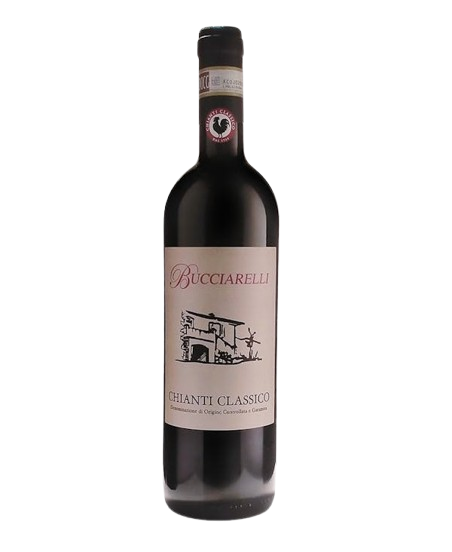
Bucciarelli's history dates back to the Renaissance: it was 1549 when Michelangelo Buonarotti purchased the Podere Casanova, now the heart of the company. Almost several centuries later, the Bucciarelli family continues to cultivate these lands with the same dedication, carrying on a tradition that today lives in the hands of Riccardo and Mattia.
The vineyards, located in Castellina in Chianti, create a pure Chianti Classico da Sangiovese, a direct and unfiltered expression of the territory. The wine has a bright ruby and a rich olfactory profile, where black cherry and visciola intertwine with sweet spices, light notes of vanilla and mineral nuances. On the palate it is vibrant, with well-integrated tannins and a freshness that supports a long fruity persistence.
At the table, he effectively accompanies traditional Tuscan dishes, from pappardelle to ragù to stewed meats.
LE MASSE DI LAMOLE - CHIANTI CLASSICO
GREVE IN CHIANTI
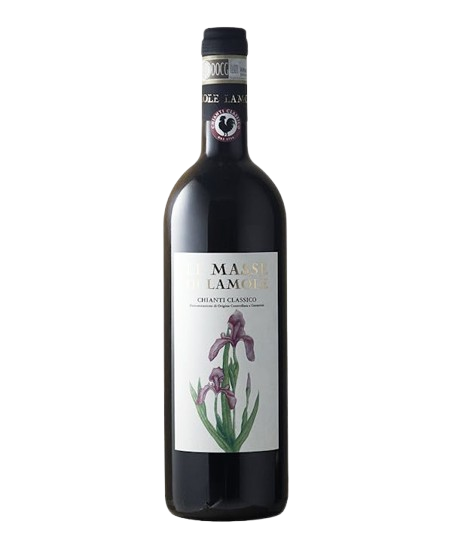
In Lamole, one of the highest and most evocative places in Chianti Classico, Annamaria leads the fifth generation of a farming family, cultivating vineyards that reach up to 660 meters above sea level, among the highest in the appellation. Here, viticulture is made up of terraces, manual labor, and a deep relationship with a landscape that imposes rigor but restores elegance. The cellar, divided into small rooms under a medieval structure, follows a traditional approach, with fermentation in steel and aging in large oak and chestnut barrels.
Its Chianti Classico, from Sangiovese in purity, presents itself with an intense ruby red and an aromatic profile reminiscent of cherry and morello cherry, red flowers, undergrowth and dark spices, with elegant references to wood. On the palate it is tasty and tense, with live tannins and a marked freshness that defines Lamole's style: vertical, elegant, never excessive.
At the table he prefers pairings played on finesse: a beef tartare, a mushroom first course or a roast guinea fowl.
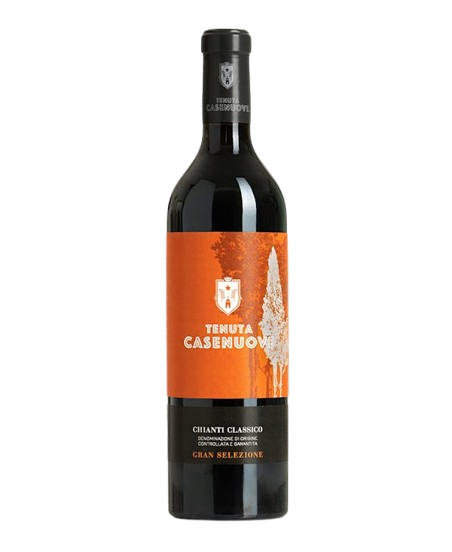
TENUTA CASENUOVE - CHIANTI CLASSICO GRAN SELEZIONE "VIGNA SOPRATORRE"
GREVE IN CHIANTI
In the heart of the Conca d'Oro in Panzano, Tenuta Casenuove was born from the vision of Philippe Austry who, since 2015, has restored the property to its original charm, combining architectural care and agronomic precision in a project with a European scope. Casenuove is in fact part of a broader design that encompasses realities such as the Commanderie de Peyrassol on the French Riviera, Chateau Malescasse in the Médoc and Quinta da Corte in the Douro Valley.
The Grand Selection "Vigna Sopratorre", from Sangiovese in purity, represents the highest expression of this approach. Intense ruby by the glass has a clear flavor profile: violet, red fruits, cherry in spirit, followed by spices, tobacco and light balsamic notes. The sip is tense, elegant and perfectly balanced.
At the table he finds his ideal pairing with structured dishes: a Florentine steak or a braised meat.