


Ischia’s tireless "gardeners": a venture involving the sea, the volcano and the use of sulphur
 Maddalena Frigerio,
Friday, 15 May 2026 (0 minutes read)
Maddalena Frigerio,
Friday, 15 May 2026 (0 minutes read)


Amidst the steep terraces of Ischia, where the vines are intertwined with the landscape and the island’s history, a form of viticulture is taking shape that is characterised by daily toil, artisanal care and a deep respect for the land. In this interview, we hear the story of those who have chosen to protect this fragile territory, including through their experimentation with sulphite-free winemaking.
Growing Biancolella, Forastera and Piedirosso on steep terraces amounts to practising "extreme" viticulture. What is the greatest sacrifice – and the most genuine satisfaction – of this work?
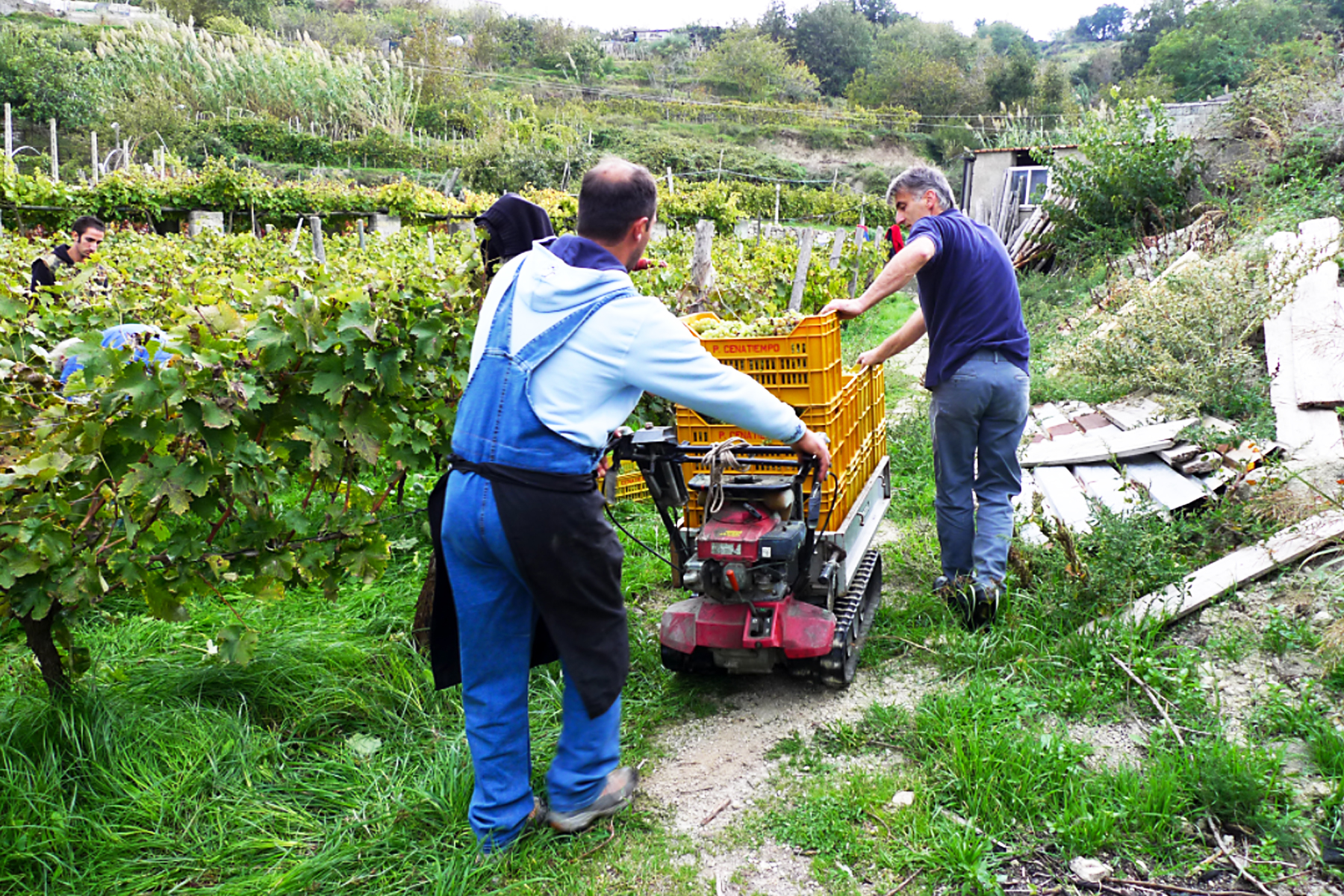
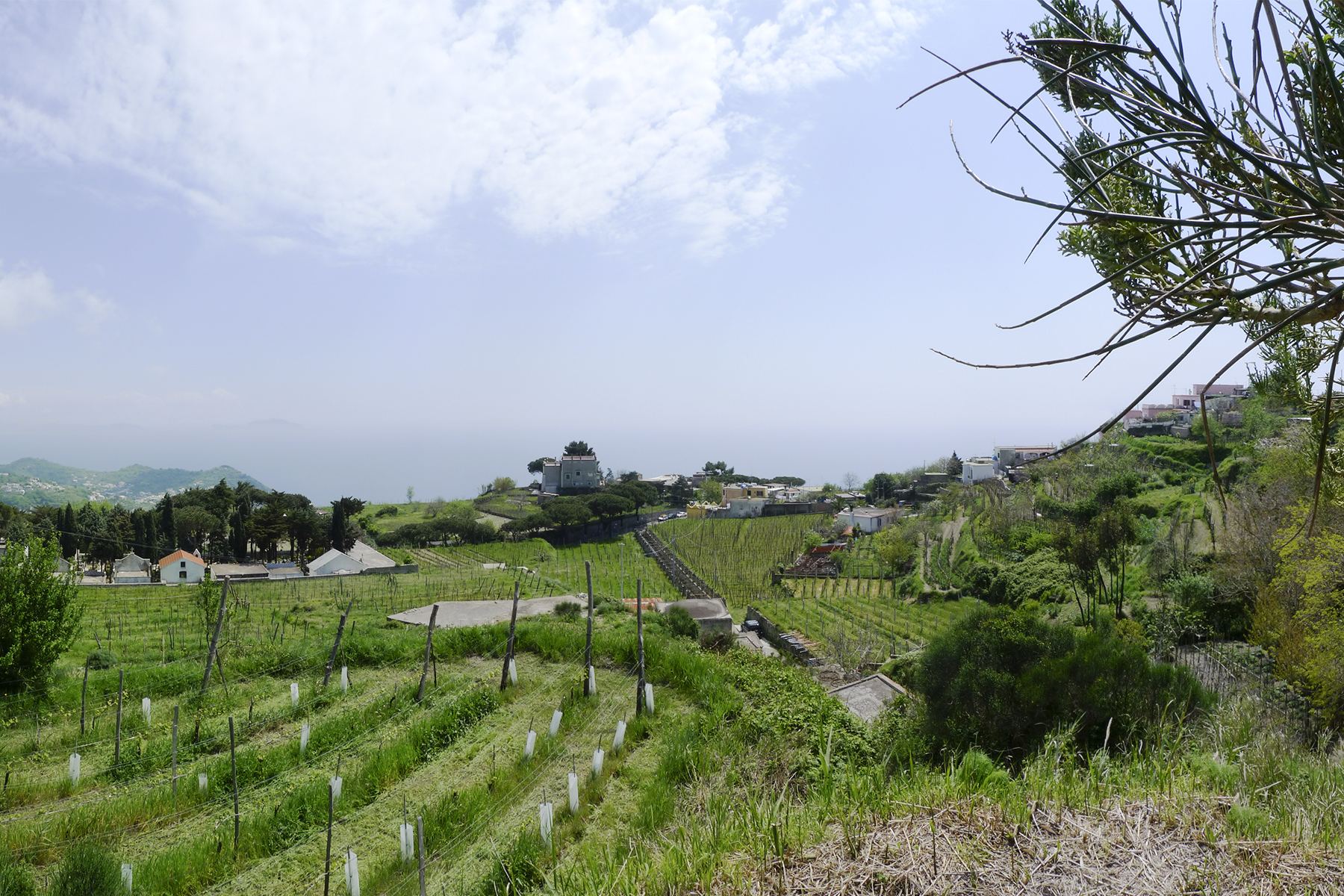
The greatest sacrifice is undoubtedly linked to the time and effort involved: on the terraces, everything has to be done by hand, with no possibility of mechanising the work. Today, we hear more and more about high-tech viticulture, almost ‘of the future’, with automated tractors and increasingly efficient processes. We, on the other hand, still often work on foot, moving from one vineyard to another and tending to each terrace individually. The most genuine satisfaction, however, is seeing these cultivated terraces coexist harmoniously with the island’s landscape. The vineyard is not merely about production: it helps to shape the very landscape of Ischia and preserve its identity.
In your wines, the absence or reduction of sulphites is a key choice: where does this decision stem from, and what are you seeking to convey through this choice?
This decision stems from a personal conviction that underpins my general approach to food. I always seek out products that have been "tampered with" as little as possible, from vegetables right through to wine. Here at Cenatiempo, we are a team of almost ten people and we look after both the vineyards and the vegetable garden ourselves. We do this because we want what ends up on the table to be the result of the land, without chemical additives or invasive treatments.
Applying this principle to wine means trying to intervene as little as possible. We are now in our second generation and we are well aware that some compromises are necessary: making wine completely without sulphur dioxide is not easy. For this reason, we have tried to minimise its use, working closely with our oenologist, Angelo Valentino.
Over the years, we’ve experimented a great deal. I tended to push the boundaries, drastically reducing the sulphur content without Angelo’s knowledge, but sometimes the wines would become oxidised, losing their bouquet and aromas. Until, a few years later, it was Angelo himself who suggested we really try making sulphite-free wines, following a specific protocol that required time and patience.
And so, in 2021, this project was born: a wine produced through the hyper-oxidation of the must, an ancient technique reinterpreted in a modern key. This was the true origin of our "zero sulphites" challenge. But without him, I couldn’t have imagined this project. The reference on the label, ‘Protocollo Valentino & Cenatiempo’, is intended as a small token of the gratitude I owe him.
Making wine without sulphites requires greater care and also involves more risks. What was the biggest challenge you faced, and how do you win consumers’ trust in this type of wine?
We’ve actually only recently started presenting these wines… the initial reaction is often one of curiosity, but also of scepticism. Some people arrive full of enthusiasm, whilst others approach the tasting with a degree of doubt. What matters, however, is that when they taste them, people are pleasantly surprised: they find clean aromas, complexity and no unpleasant odours. In this respect, the rewards have been truly great.
This is exactly how you win over consumers: by letting the wine speak for itself in the glass.
We could almost describe you as the island’s "gardener". What does it mean to you to look after Ischia through your vineyard, in a place so fragile and steeped in its own identity?
We have experienced the fragility of the landscape first-hand. Ischia is fragile in many ways: overdevelopment can compromise the landscapes that nature has bequeathed to us in perfect condition, and unfortunately we have seen this happen in the past.
But it is also fragile from a geological point of view: landslides and floods are part of the island’s history, due to the very nature of the terrain. In this sense, terraced viticulture also plays a protective role. During the last flood, for example, the presence of the terraces helped to block one of the landslides along its route.
Would I describe myself as a "gardener" of the island? Yes, but always in the context of teamwork. I believe our task is to safeguard the land, as well as to cultivate it.
How challenging is it these days to be a producer on a small island like Ischia, given the costs, tourism, transport and climate change? And what are the advantages of working in such a unique setting?
On an island, costs are inevitably higher: everything that arrives here costs more, just as it costs more to ship what we produce off the island. What’s more, Ischia relies mainly on tourism, and at times viticulture seems almost like a ‘burden’. The vineyards are often close to holiday homes or hotels, so we have to adapt our working hours: you can’t start work at six in the morning next to a hotel full of guests. The same applies to treatments, which must be carried out at times and in ways that are as unobtrusive as possible.
All this requires a constant ability to adapt.
On the other hand, however, there is also a major advantage: tourists see with their own eyes the work that goes into making the wine. They see the vineyards, they see the hard work, they see the land. And this gives the product a much stronger perceived value.
Reviving abandoned land and continuing with such a demanding form of viticulture seems almost like going against the grain. Was it a radical choice of freedom for you, or, in some way, an inevitable responsibility towards the land and your family history?
When faced with a choice like that, you inevitably feel the weight of responsibility. I am the youngest of four children and I knew that, if I had turned it down, the business would probably have come to a standstill. At the same time, however, I never felt under any obligation.
My father didn’t force anything on me: it was a free choice.
I was already familiar with the work in the winery and thought it was worth a go. So I’d say it was a balance between personal freedom and a sense of responsibility towards the land and our family history.
And I believe that one day this same choice will present itself to my children. I hope to be able to do what my father did for me: leave them completely free to decide their own future.