


We could say you’re a “Vulcanaro by adoption.” What drew you to this place, and what inspired you to make wine on an island like Vulcano?
It all began in the 1980s, when my family and I used to spend our vacations in the Aeolian Islands—on Vulcano, to be exact. My parents’ passion for this place soon became my own; I was immediately and deeply captivated by it.
The most “romantic” memory I associate with my fascination for this place dates back to those very years. I started coming here when I was in middle school, and around that time, we began studying The Odyssey and Ulysses’ journey across the Mediterranean in class. I became familiar with the stories of Calypso, the sorceress Circe, Polyphemus, the Nymphs, and the Sirens, and I remember that, while staying in the Aeolian Islands, I had the feeling that the places I was studying in my books might actually be these very ones.
This overlap between what I was learning in school and what I was experiencing here fascinated me immensely. That’s how Vulcano came to mean more to me than just a vacation spot: it became a place close to my heart.
The winery has been brought back to life after about 50 years of neglect, thanks in part to your father’s efforts. How important was it to restore these vineyards and revive a winemaking tradition that seemed lost forever?
In the 1990s, my father, who was an entrepreneur by trade, came across these plots of land, which were in an extraordinary location but had been completely abandoned. He therefore decided to purchase them and replant the vineyards. At the time, there were nothing but ruins of a manor house, whose ground floor housed the wine cellar, the so-called “palmento.”
Initially, we sold the grapes and had the wine made by third parties, until 2014, when we decided to renovate this old winery—which had been abandoned for decades—thus bringing back to life a place that was part of the island’s winemaking history.
I came from a completely different academic background—I’m an aerospace engineer. Over the years, however, I grew increasingly attached to this place and realized it needed closer attention. Carrying out this project required time, dedication, and research, and at that time I had the opportunity to devote myself to these things, so I decided to get personally involved.
Today, I also have the honor of leading the Consortium, the guardian of a wine as prestigious as it is deeply rooted in ancient tradition: Malvasia delle Lipari. This wine has, in fact, always played a prominent role in the major European courts and among the clergy. Following the phylloxera crisis, the world wars, and the subsequent waves of emigration, viticulture in the Aeolian Islands went through a period of great hardship, and the islands’ winemaking heritage was in danger of being lost. This is why I consider the restoration and promotion work we are carrying out to be all the more important.
Here, the vineyard literally sits atop a volcano: the soil contains a significant amount of volcanic ash. What are the characteristics of this soil, and how do the vines behave when growing in such unique soil?
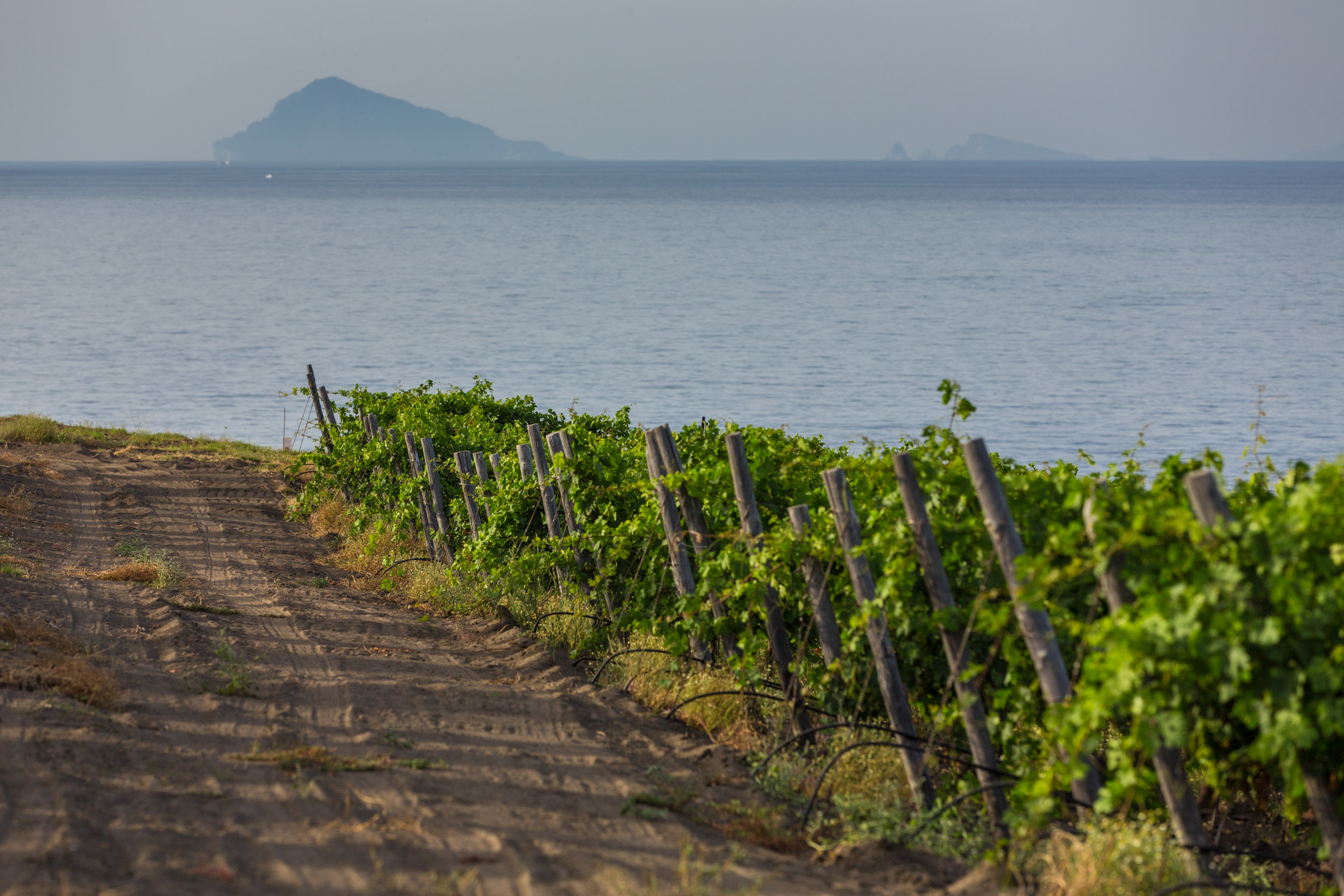
The soil here has very distinctive characteristics. The vineyards are located on a lava flow that extends into the sea: on three sides there is water, and on this strip of land lies the vineyard.
At first glance, the soil may appear sandy, but it is actually composed of tiny black lapilli. It is therefore not sand, but rather volcanic ash, which makes this soil very unique and deeply connected to the island’s volcanic nature.
And then there is one element that makes this area even more unique: the volcano is active. Vulcano is not simply a place characterized by its volcanic origin, but a territory where the volcano’s presence continues to be felt.
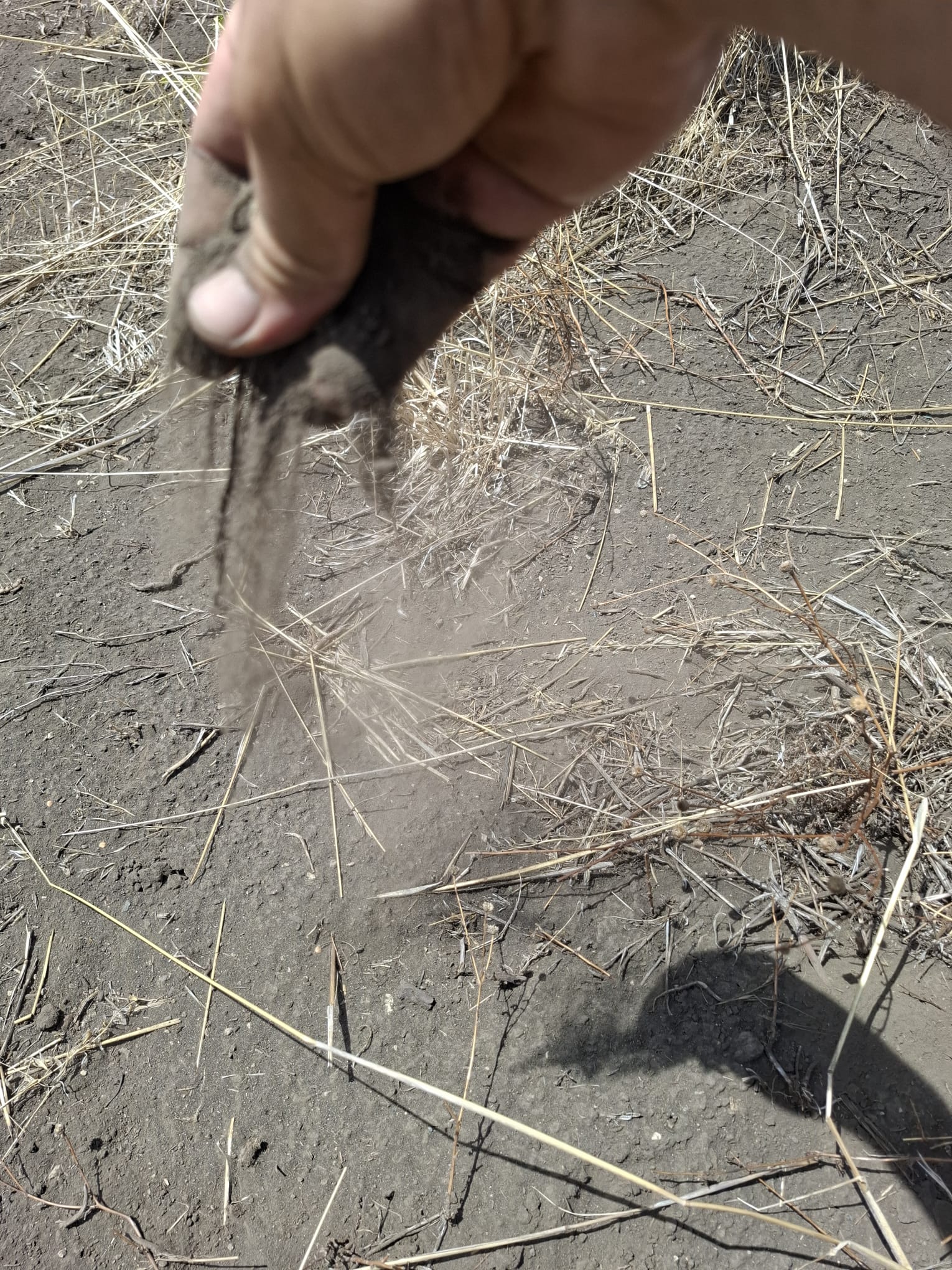
How do these characteristics of the vineyard ultimately manifest themselves in the wine?
The soil we just mentioned is “poor” soil, particularly well-suited to grapevines. The fact that it is young soil and that the vineyards are located on slopes contributes to a low yield per hectare.
This low yield results in more concentrated grapes, in which the characteristics of the grape variety and the terroir are more pronounced. In the wine, this translates to more intense aromas and greater concentration, accompanied by a distinctive savory character.
Rounding out the profile are a pronounced freshness and good acidity, which are also enhanced by the vineyard conditions and low yields. It is precisely these elements, together with the volcanic component of the soil, that contribute to giving the wines such a distinctive identity.
Let’s talk now about Malvasia delle Lipari. What does this grape variety mean to you, and why do you think Vulcano, in particular, is the region best able to bring out its unique character?
On the island of Vulcano, as on the other Aeolian Islands, grapes have been cultivated since ancient times. There is evidence of viticulture dating back to Roman times: of course, we do not know which varieties were grown then, but we do know that Malvasia has been cultivated in the Aeolian Islands at least since the Middle Ages—that is, for over 500 years.
Even today, Malvasia remains a very important part of Aeolian viticulture, accounting for about 60–70% of the total vineyard area. Its historical significance is therefore one of the main reasons we chose to produce it: it is a grape variety deeply rooted in the history and identity of these islands.
Our Malvasia vines were planted in 2004, so today they are over twenty years old. They have reached full maturity, a stage in which they are able to best express their characteristics, both in terms of grape ripeness and product quality.
Added to this are the unique characteristics of our soil—young, volcanic, and characterized by low yields—which help produce grapes of great concentration and quality. It is precisely the combination of a grape variety deeply rooted in the history of the Aeolian Islands and such a distinctive terroir that, in my opinion, makes Malvasia di Vulcano so interesting.
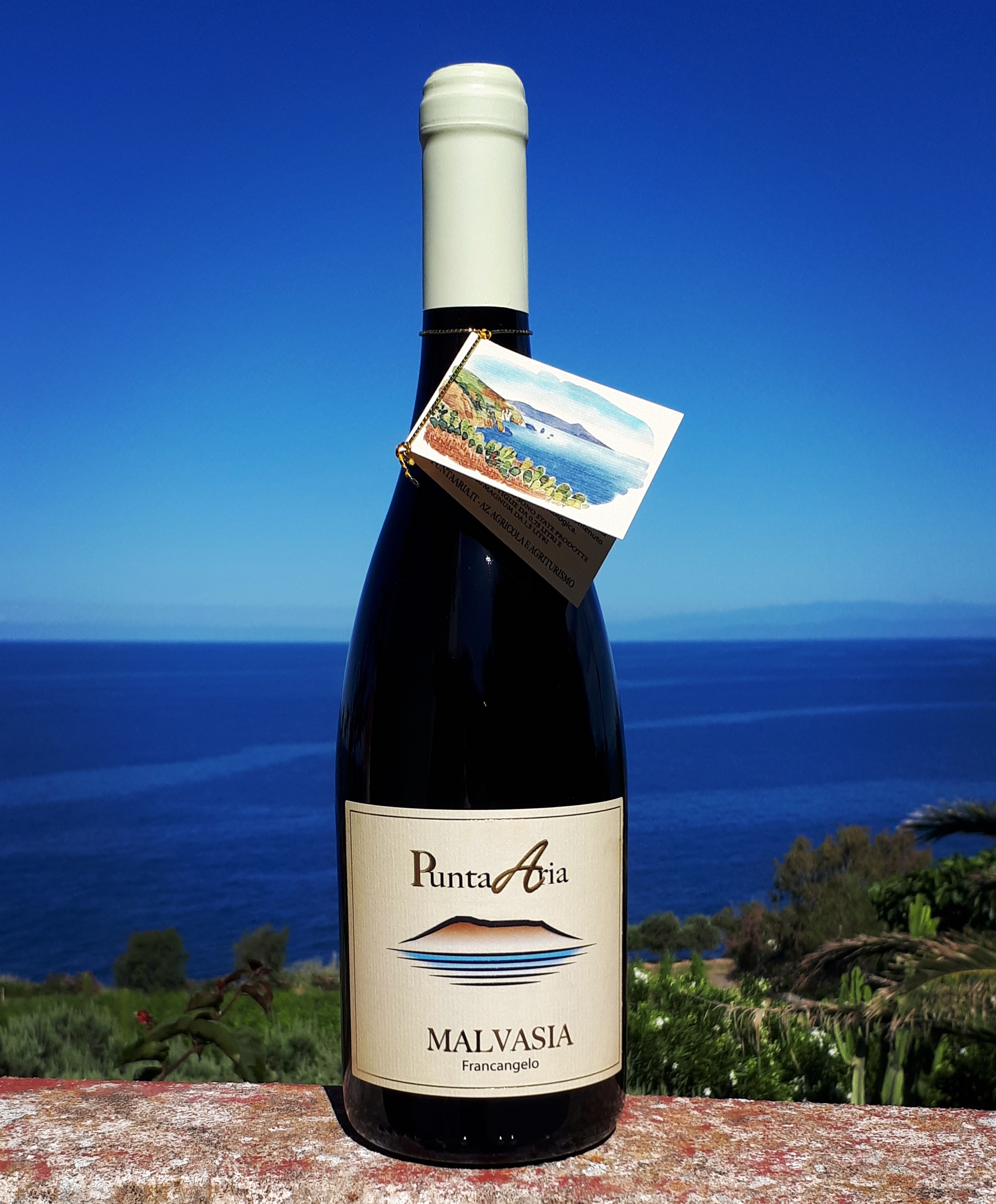
The company has been certified organic since 2014. How important is it to farm organically in an environment as fragile and unique as that of the island of Vulcano? What are the challenges and what are the rewards?
Choosing organic farming here in the Aeolian Islands is, in my opinion, a very natural choice. The climate of these islands is particularly favorable and allows us to work while keeping interventions in the vineyard to a minimum. When treatments are necessary, we use very low doses—of sulfur, for example. We are therefore fortunate to be able to rely on climatic conditions that greatly assist us in the organic management of the vineyard. Added to this natural component is a strong ethical motivation. For me, running a business also means making responsible and balanced choices, respecting the territory in which we operate, as well as the flora and fauna that inhabit it.
In an environment as unique and fragile as that of Vulcano, I believe this approach is even more important. Working organically means striving to preserve the land over time and, at the same time, adopting a method that I consider to offer greater protection for the end consumer as well.
Water management is also an important aspect. Malvasia delle Lipari is, in fact, well-adapted to the hot, dry summers of the Aeolian Islands. Water scarcity may result in a lower yield per hectare, but it does not compromise either the quality of the grapes produced or the health of the vine. In this regard, the leaves’ ability to absorb nighttime moisture—which is particularly abundant in an area so close to the sea—also plays an important role.
The greatest satisfaction, therefore, is being able to produce wine while striving to respect as much as possible the place where that wine comes from.