


A day in early summer in South Tyrol. The sky of the Isarco Valley suddenly closes and a summer storm advances through the mountains. Thunder, rain and the sound of the wheels of an old white Defender going up eleven kilometers of forest road. Norbert is driving.
The destination is Radoar mountain hut, the family mountain hut. When we arrive, Norbert's first gesture is as simple as it is ancient: lighting the fire in the old, cheap stove. In a few minutes the environment warms up and, only then, does the story begin. A story about land, nature, and a way of farming that today seems almost revolutionary precisely because it stems from common sense. Norbert likes to call himself a farmer first and foremost. It is a definition that encompasses a precise vision: observing nature, understanding its rhythms and working with what it makes available.
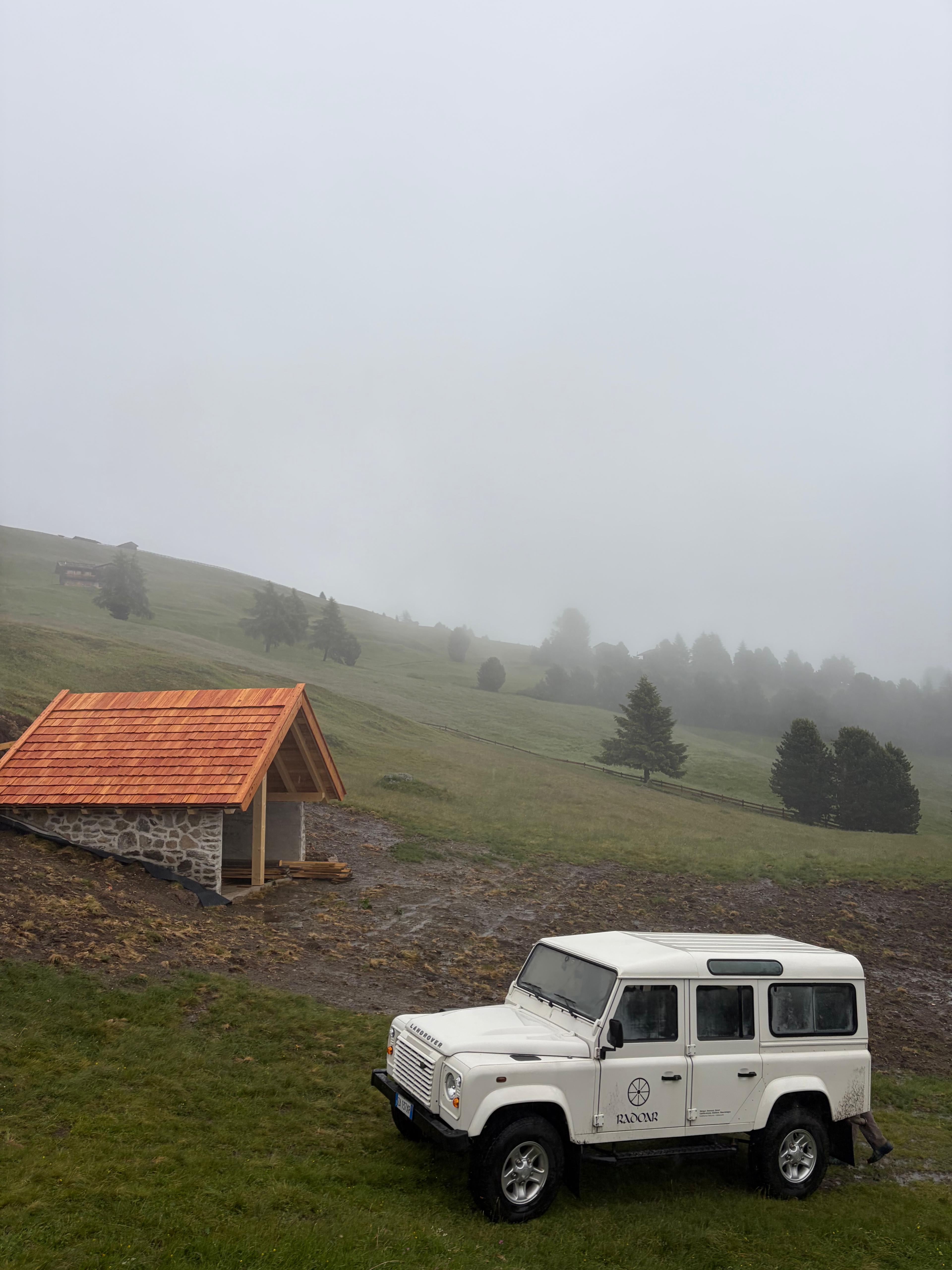
The Radoar mountain hut represents the highest point in this history, at 1800 metres above sea level. Norbert spent three months here every summer as a child. It is a place of memory, but also an essential part of the farm. During the summer, four Alpine Greys graze there, two males and two females. Few animals, seemingly marginal in a company that today produces mainly wine. Yet, they are fundamental.
To understand why you need to go down to Velturno where, along the Chestnut Trail, the family farm stands.
It is a classic closed farm in the Isarco Valley, an agricultural organization that has belonged to the same family for over a century and a half. The building dates back to the fourteenth century; Norbert's ancestors purchased it in 1850 and today he represents the fifth generation. He has been working here since the nineties.
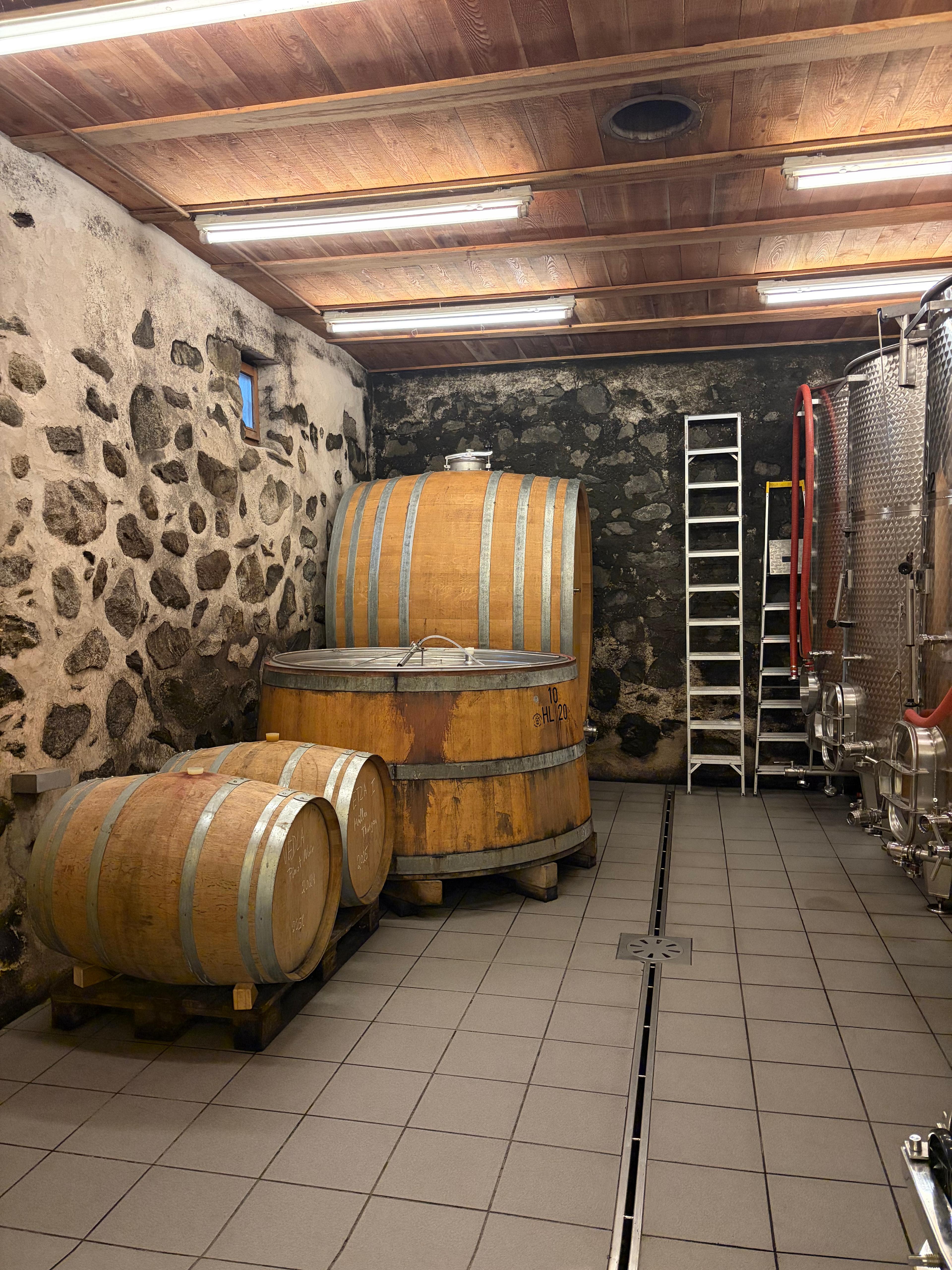
Before Norbert's arrival, breeding and milk production were the main activity. Today, it is wine that has become the best-known face of the farm. But it would be a mistake to reduce everything to the vineyards.
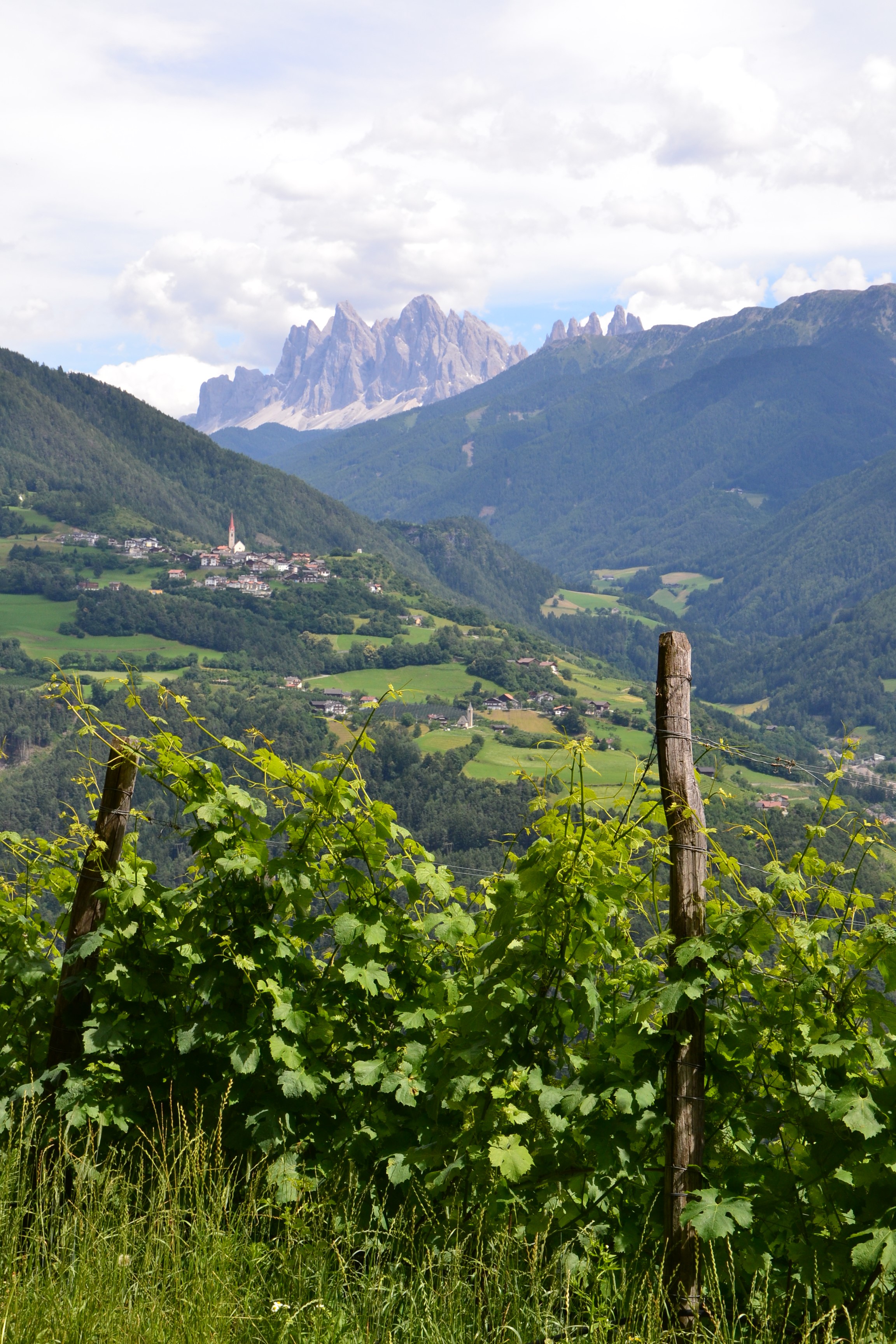
The company's seventeen hectares in fact tell a much more complex story. Four hectares belong to the mountain hut. Four others are occupied by woods and chestnut groves. The rest is divided between vineyards and orchards. Pinot Noir grows in the lowest vineyard; Riesling reaches 830 meters above sea level; Kerner, planted in 2022, reaches nearly 860 meters. Just above it still lies an ancient chestnut grove, a heritage that belongs to both the family and the Velturno culture.
Apples, pears, plums, quinces, elderberries and chestnuts coexist among the rows and orchards. They are not accessory crops, rather they are the building blocks of a system. This is precisely where Norbert's philosophy emerges.
«It's important to me to work with what's there», he says. «We have the vineyard, the fruit, the chestnut grove, the mowing meadows. For this reason it is important that the cows are still there».
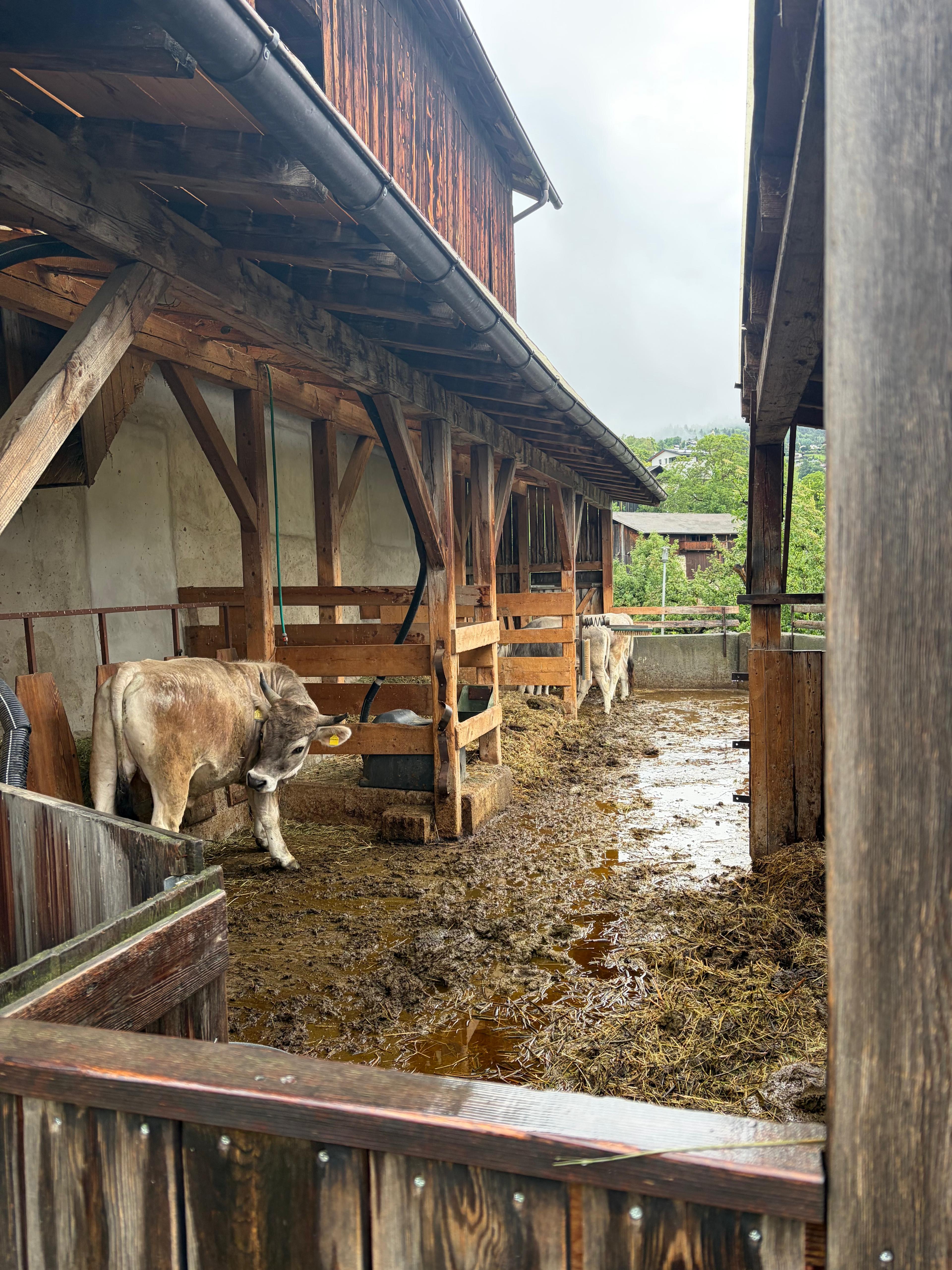
The four Alpine Greys, one of the oldest cattle breeds in the Alps, are not used to produce milk. Their presence ensures the manure necessary for the fertility of the land, contributes to agritourism hospitality and keeps alive a balance that would otherwise be lost. They close the circle.
It's a word that comes back often when listening to Norbert: circularity.
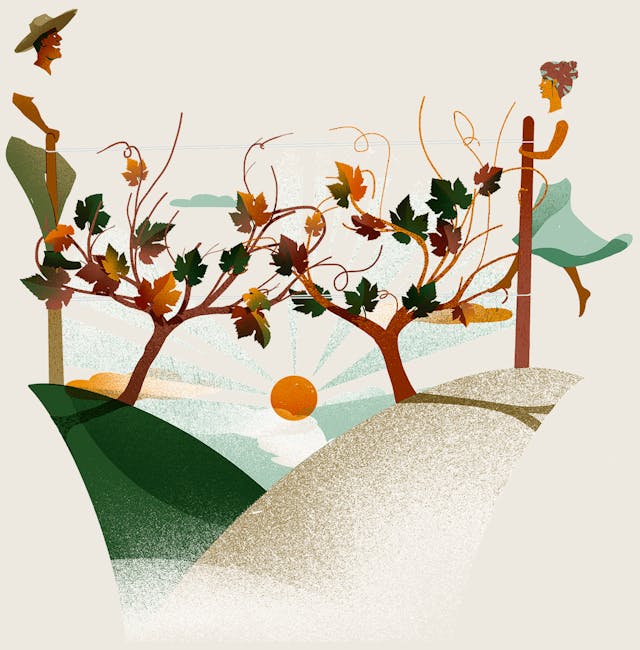
Nothing exists in isolation. The forest protects the ground. Animals feed the fields. The meadows produce hay. Chestnuts preserve biodiversity and traditions. Fruit becomes juices and distillates. The vineyards produce wine. Each element supports the other.
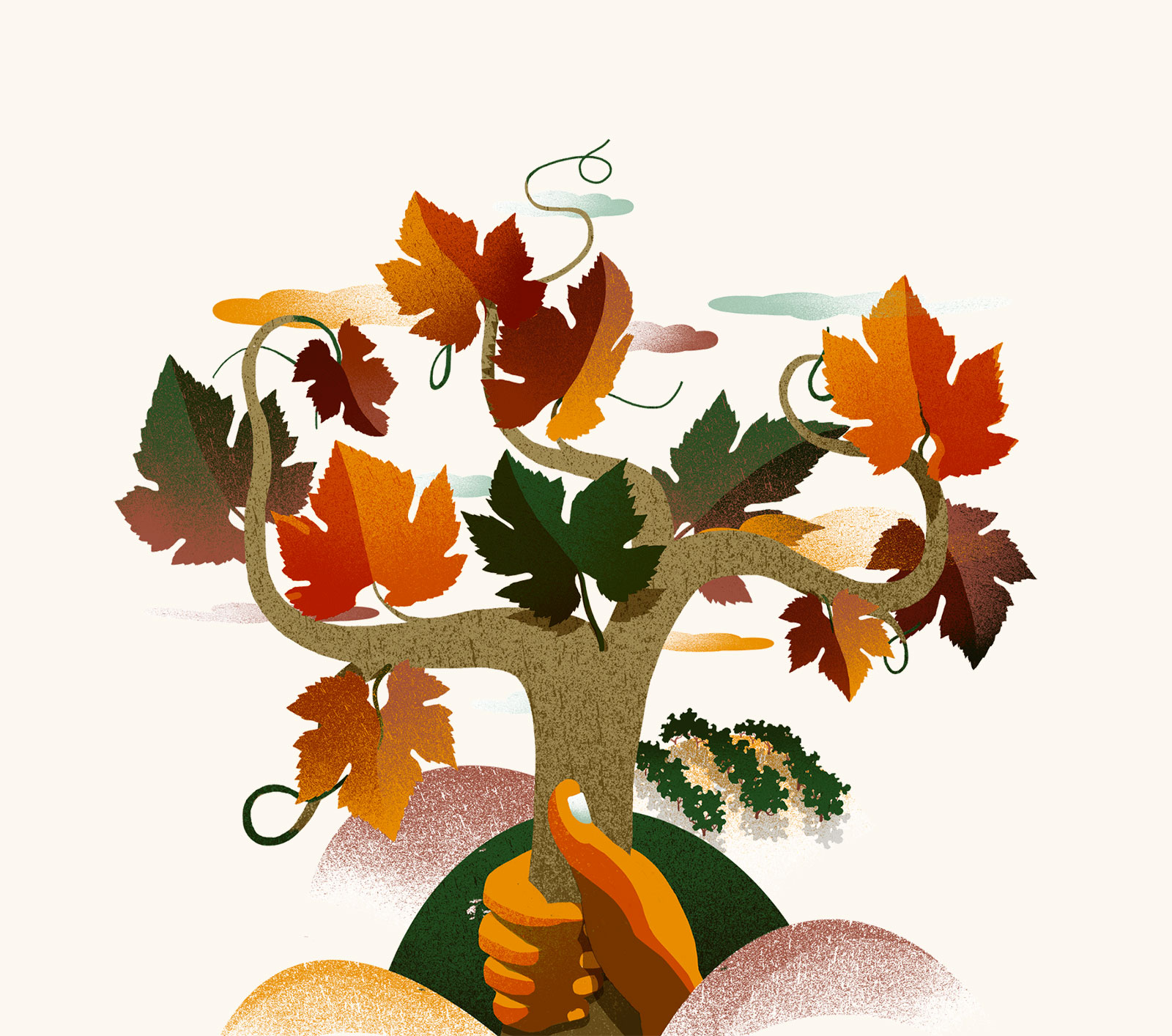
The company has been certified organic for over thirty years, but the definitions are tight on Norbert. His approach incorporates many principles of biodynamics, without turning into ideological affiliation.
In 2005 he met Andrew Lorand, a Swiss agronomist and profound expert in biodynamic viticulture. For three years he follows his intensive courses. It is an experience that leaves an important mark, but which is filtered through a personal sensitivity.
«Today we obviously need certifications», he explains, «but for me agriculture goes further. It means living and thinking about your work considering everything that is part of it: the soil, the climate, the mountain hut, the forest, the chestnut grove, the cellar and the distillery».
His seems like a search for coherence. A natural logic that is also reflected in product transformations. As in apple juice, made here since the seventies. A blend that combines Golden Delicious, Topaz and numerous local antique varieties including Brixner Plattlinger and Steinpepping. For Norbert, juice is not simply a drink: it is a way to conserve the energy of the fruit, to preserve the harvest over time.
The same goes for chestnuts, a symbol of Velturno's identity and the protagonists of the famous Chestnut Trail, whose valorization also owes much to its commitment. Every autumn, between manual harvesting and roasted chestnuts offered to visitors, a profound relationship between the territory and the community is renewed.
In an age when agriculture tends towards extreme specialization, Norbert's farm offers another possibility. That of a farm that does not chase simplification but cultivates an apparent complexity that nevertheless leads to a natural and necessary balance. A place where vineyards, woods, animals, chestnut trees and orchards coexist in balance.
Perhaps this is precisely the most authentic meaning of his being a farmer. Do not produce a single thing in the best possible way, but create the conditions for each element of the earth to contribute to the life of the other.
Like a circle that keeps closing, season after season.